The Two New Balls Rule And What It Did To ODI Cricket
Two new balls were brought in to solve a visibility problem. They removed reverse swing instead, and the 2025 revision is the game trying to get it back.
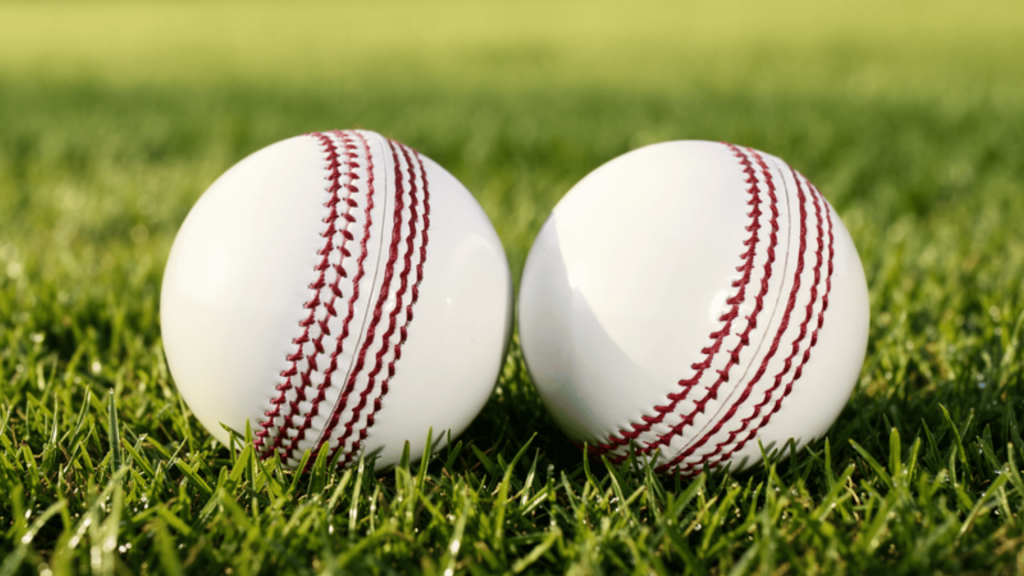
For most of one day cricket’s life, an innings was partly a story about one ball getting old. It shone for ten overs, went soft through the middle, and if the seam held together it might start to swing back the other way at the end. Bowlers planned around that decay. So did batters.
Then the rule changed, and the decay stopped happening. The two new balls rule is the single biggest reason the modern fifty over innings looks the way it does, and in 2025 the game quietly admitted it had gone too far.
What The Rule Says Now
Since the playing conditions were revised in July 2025, a one day international innings works like this. Two new balls are taken at the start, one from each end, and they alternate over by over until the end of the thirty fourth over. At that point the fielding side chooses one of those two balls, and that single ball is bowled from both ends for the last sixteen overs. The other is withdrawn.
That is a small change on paper and a large one in practice. The ball that finishes the innings is now a genuinely used ball rather than a half used one.
How The Ball Ages, Era By Era
| Era | Balls In Use | Age At The Fiftieth Over | Practical Effect |
|---|---|---|---|
| Before October 2011 | One, changed late in the innings | Roughly 16 overs | Some reverse swing available |
| October 2011 to July 2025 | Two, one from each end, all fifty overs | 25 overs | Reverse swing almost gone |
| From July 2025 | Two to over 34, then one chosen ball | Up to 33 overs | Reverse swing possible again |
Why Two Balls Arrived In The First Place
The change in 2011 was not made to help batters, even though that is what it did. It was made because the white ball was failing. White leather scuffs and discolours faster than red, and by the late forties a single ball could be grey, soft and genuinely hard to pick up against a crowd background. Teams complained. Broadcasters complained. Replacing a ball mid innings with a used substitute was never satisfactory either, because nobody could agree on how used the replacement should be.
Giving each end its own new ball solved the visibility problem completely. Neither ball ever got older than twenty five overs, so neither ever went grey. It was a clean fix for the thing it was designed to fix.
The Cost Nobody Priced In
Reverse swing needs an old ball with one rough side and one side that has been kept smooth. Getting there takes work and it takes overs. Thirty five or forty overs of wear on a white ball used to be enough. Twenty five is not.
So the skill simply left the format. A generation of fast bowlers came through playing one day cricket in which the ball never reversed, which meant the last ten overs became a contest between a hard ball and a batter with a free swing. Hard balls travel. The scores went up, and they stayed up.
There was a second cost, less discussed. Spinners in the middle overs were bowling with a ball that was eighteen or twenty overs old at most, with lacquer still on it. Grip is harder to find on a ball like that. The middle overs, which used to be where a spinner could squeeze, became a holding exercise instead.
What It Did To The Last Ten Overs
Three things happened at once. The ball stayed hard, so it carried. It did not reverse, so the yorker stopped being a ball you set up and became a ball you simply had to land. And because everyone knew the ball would not misbehave, batting sides stopped protecting wickets for the death and started spending them earlier.
The arithmetic followed. A side that once treated 280 as a defendable total began treating 300 as a par score and 350 as reachable. Chasing teams, in particular, learned that the required rate could be left to climb into the last fifteen overs without much fear, because the bowling was not going to get harder.
The Correction, And What It Is Trying To Undo
The 2025 revision is a compromise rather than a reversal. Visibility is still protected, because no ball is more than about seventeen overs old when the choice is made at over thirty four, and the one that continues has sixteen overs to live. It never reaches the grey, formless state that caused the original problem.
But thirty three overs of wear is enough to open the door again. It is enough for one side to be genuinely rough. It is enough for a bowler who has been shining one side since the fifteenth over to have something to show for it. Whether that translates into regular reverse swing depends on surfaces, outfields and how well a side manages the ball, and it is still early. What matters is that the possibility exists at all, which it did not for fourteen years.
There is also a tactical layer that did not exist before. The choice at over thirty four is a real decision. A captain picks between a ball that has been bowled mostly by seamers into the pitch and one that has been handled more gently, and that choice says something about who is bowling the last ten overs.
How To Watch An Innings Under The New Rule
Three moments are worth tracking.
- Around the fifteenth over. Watch which side the fielding team is polishing. A side with a plan has already decided which ball it intends to keep.
- The end of the thirty fourth over. The choice itself. If the quicker, harder ball is kept, the side is probably backing pace at the death. If the scuffed one goes on, somebody expects it to move.
- Overs forty two to forty six. This is where reverse swing shows up if it is going to. If the ball is tailing late into the right handers’ toes in this window, the innings has a different ending than it would have had in 2019.
None of this is settled yet. Conditions vary, and a dewy evening will kill reverse swing regardless of how old the ball is. But for the first time in well over a decade, the ball at the end of a one day innings is allowed to be old, and old balls do things that new ones cannot.